
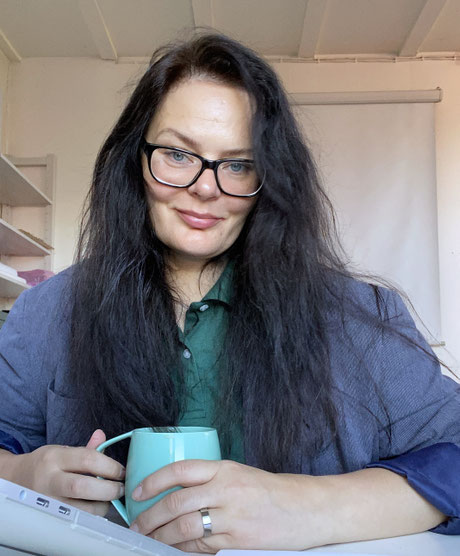
Artist's statement
My art is a diary of time, a way to preserve traces of experience while remaining alive in a world that reminds us every day of the fragility of existence.
I work in a multidisciplinary way: with digital and analog imagery, video, textiles, painting/graphics, collage, text, performance, and installations. At the core there is always the idea and the research; the medium is only a tool for realization.
In contrast to established professional expectations, I do not strive to develop a single recognizable style.
My themes include: the digital trace of contemporary human beings, ecology, loneliness, generational continuity, the phenomenon of time, and memory.
I favor color over figuration and often use patterns and repetitions, which serve as grounding points for me, a means to balance inner states.
After the full-scale invasion of russia into Ukraine, my artistic expression has been profoundly altered by context. My perception now passes through the prism of new experiences, new habits, even survival skills, all of which shape my work. The search for self within chaos yields deeper results and expands the field of vision.
The awareness of Ukrainian unity brings a deeper understanding of my own solitude and vulnerability. The distance between the collective and the personal increases through the globalization of collective responsibility and the growing weight of the social contract.
Questions arise:
- who am I within this collective experience of war?
- what is my place, and do I still have the right to the same basic goods that once seemed ordinary?
- how does my social status as a childless, unmarried woman affect the way society and the state perceive me, and what inner reflections does it generate?
- what does it mean to live in constant internal anxiety, and how can it be transformed?
- how does the physical space of cities, institutions, and private homes change in wartime?
- what constitutes the collective experience of living through war and its consequences?
The last question for me is not only artistic but also historical and archival, as I have begun building a “personal museum” of the collective experience of how Ukrainians adapt to the absence of electricity, water, and heat in non-occupied cities.
Generational continuity remains central to my practice, but now it is connected less to studying the past than to recontextualizing and actualizing the artistic heritage of Ukraine’s dissident period and pre-Soviet era.
In my practice today, there is no notion of “searching for truth,” because the war makes the boundaries between good and evil, black and white, far more tangible and undeniable. When someone wants to kill you, the answers become clear.
Even death, however, must remain a matter of personal choice unless it is determined by age or by accident.
Моє мистецтво - це щоденник часу, спосіб зберігати сліди досвіду й водночас залишатися живою у світі, який щодня нагадує про крихкість існування.
Я працюю мультидисциплінарно: з цифровим і аналоговим зображенням, відео, текстилем, живописом/графікою, колажем, текстами, перформансом та інсталяціями. В основі завжди ідея та дослідження, а медіум стає лише інструментом для втілення.
На противагу сформованим професійним судженням я не прагну до вироблення одного впізнаваного стилю.
Мої теми: цифровий слід сучасної людини, екологія, самотність, тяглість поколінь, феномен часу та памʼять.
У живописі віддаю перевагу роботі з кольором, а не фігуративним зображенням. Також часто використовую патерни, повтори, для мене це якір, мій спосіб знаходити стабільність і робити мистецтво ліками.
Та після повномасштабного вторгнення росії в Україну моє висловлювання змінюється через контекст. Моє спостереження відбувається через призму нових досвідів, звичок, навіть нові навички виживання мають вплив на мою творчість. Пошук себе в хаосі, дає більш глибокий результат і ширше поле для бачення.
Усвідомлення згуртування українського народу породжує ще більшу глибину розуміння своєї самотності та вразливості. Відстань між колективним та особистим збільшується, через глобалізацію колективної відповідальності, набуття більшого впливу соціального договору.
Постають питання:
- хто я в цьому спільному проживанні війни?
- яке моє місце, чи маю я право на ті ж блага, які раніше були звичними?
- як мій соціальний статус бездітної незаміжніх жінки, впливає на сприйняття мене соціуму / держави, які внутрішні рефлексії я відчуваю?
- як це жити в постійній внутрішній тривозі і як її трансформувати?
- як змінюється фізичний простір міст, інституцій, приватне житло через воєнний час?
- що таке колективний досвід проживання війни та її наслідків?
Останнє питання для мене є не лише мистецьким, а й історичним, архівним, бо розпочала збирати «власний музей» колективного досвіду пристосування українців до відсутності світла, води, тепла в неокупованих містах.
Сталість поколінь, як і раніше для мене є актуальною в практиці, але тепер вона пов'язана не з дослідженням минулого, а з осучасненням мистецького доробку України часів дисидентства та дорадянської доби.
Для мене зараз в практиці не існує поняття «пошук істини, правди», бо вплив війни робить більш дотичним та реальним відчуття не розмитості між поняттями добра та зла, білим та чорним. Коли тебе хочуть вбити ти однозначно знаєш для себе відповіді.
Бо навіть смерть має залишатись власним вибором кожної людини, якщо це не пов'язано з віком або нещасним випадком.